Ancient technologies that were surprisingly advanced

Trending Now
Welcome, dear readers, to a journey through time where ancient civilizations showcase their remarkable ingenuity.
From mysterious artifacts to colossal structures, these ancient technologies reflect a mastery of science and engineering that continues to fascinate us today. So, fasten your seatbelts as we delve into the awe-inspiring world of bygone eras!
The Antikythera Mechanism: The Ancient Greek Astronomical Computer
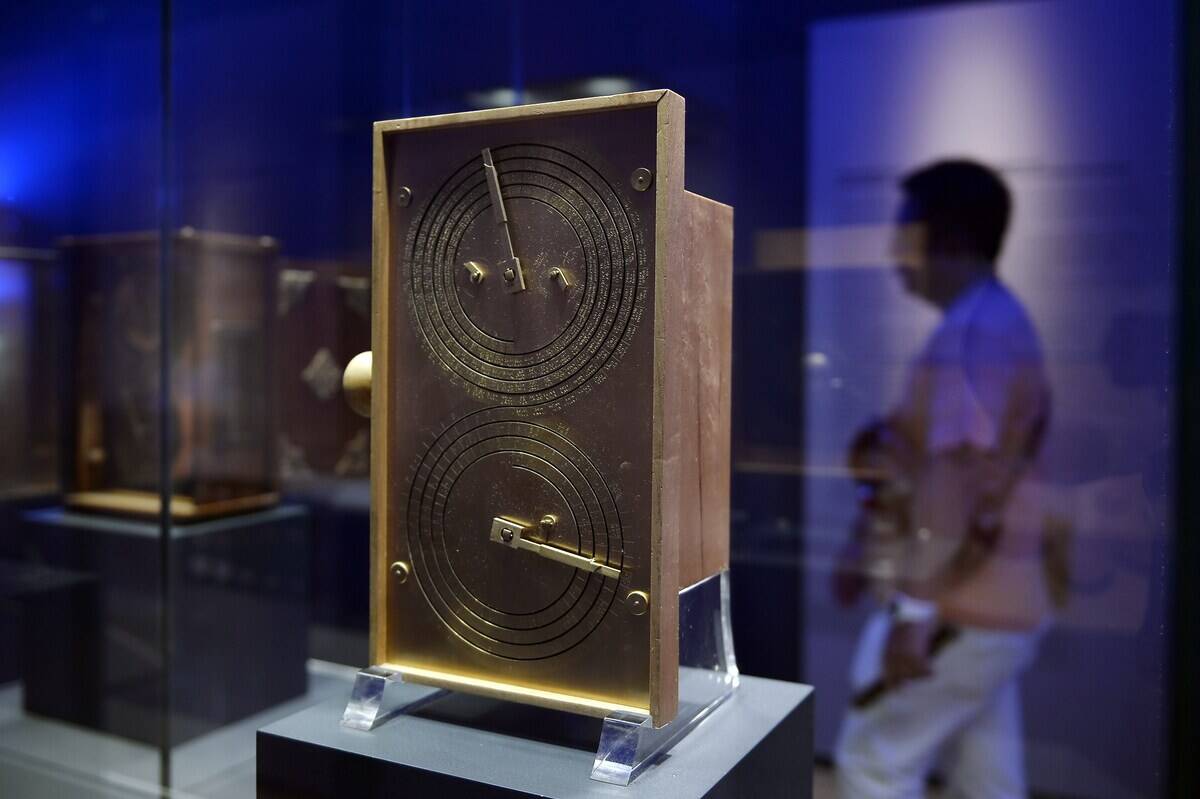
Imagine discovering a 2,000-year-old computer! The Antikythera Mechanism, unearthed from a shipwreck off the Greek island of Antikythera, is exactly that.
This complex gear-driven device astonished archaeologists with its ability to predict astronomical positions and eclipses. It’s a testament to the advanced knowledge of Greek astronomers who lived centuries before the modern age of technology.
Roman Concrete: The Unmatched Durability of Ancient Engineering

While modern concrete crumbles, Roman concrete stands the test of time. Structures like the Pantheon owe their longevity to this ancient formula, which used volcanic ash to enhance durability.
It’s a marvel of engineering that researchers today are still trying to replicate, proving the Romans had some secret ingredient in their mix that modern science is eager to rediscover.
The Greek Fire: The Byzantine Empire’s Secret Weapon
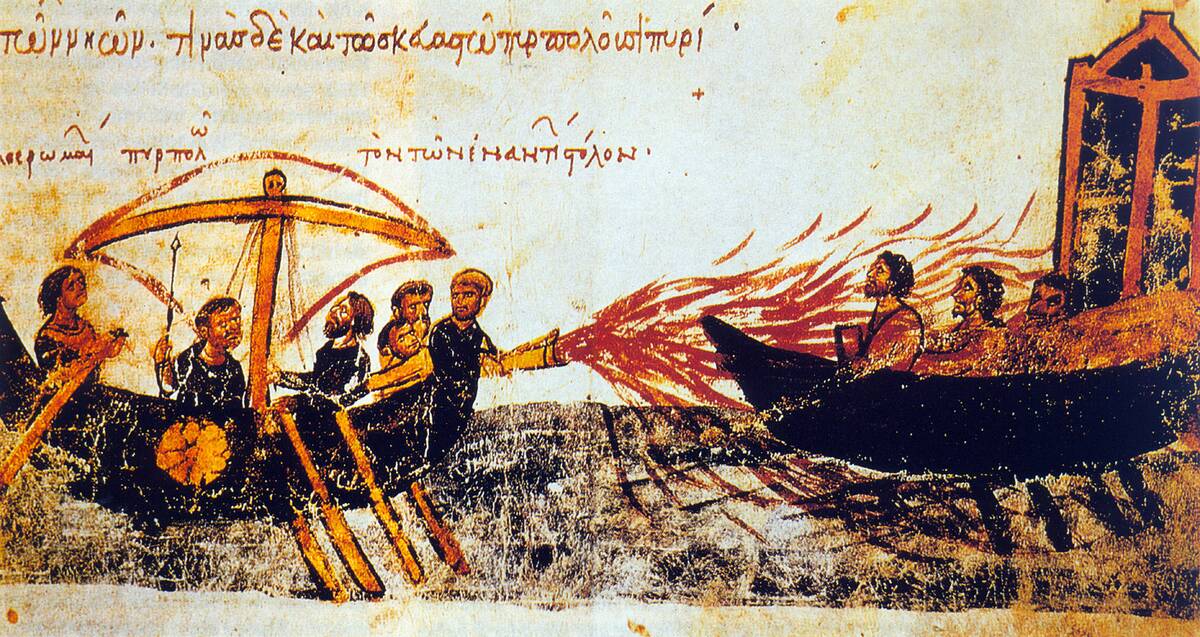
Greek Fire was the ancient equivalent of a flamethrower, and its formulation was a closely guarded secret of the Byzantine Empire.
Used in naval battles, it could burn on water, spreading panic and destruction among enemy fleets. The exact composition of Greek Fire has never been fully replicated, making it one of history’s most intriguing lost technologies.
The Archimedes Screw: A Timeless Innovation in Water Management

The Archimedes Screw, a simple yet ingenious device, revolutionized water management in ancient times. Named after the Greek mathematician Archimedes, it consists of a spiral inside a cylinder, capable of lifting water for irrigation or drainage.
This invention is so effective that variations of it are still used today, showcasing the enduring brilliance of ancient innovation.
Damascus Steel: The Legendary Metal of Medieval Swords

Damascus steel is the stuff of legends, renowned for its strength and distinctive wave-like patterns. Originating in the Near East, these swords could slice through rifle barrels—at least according to lore.
The secret to making Damascus steel was lost in the 18th century, leaving modern metallurgists to puzzle over its elusive recipe and exceptional qualities.
The Aeolipile: Heron’s Proto-Steam Engine
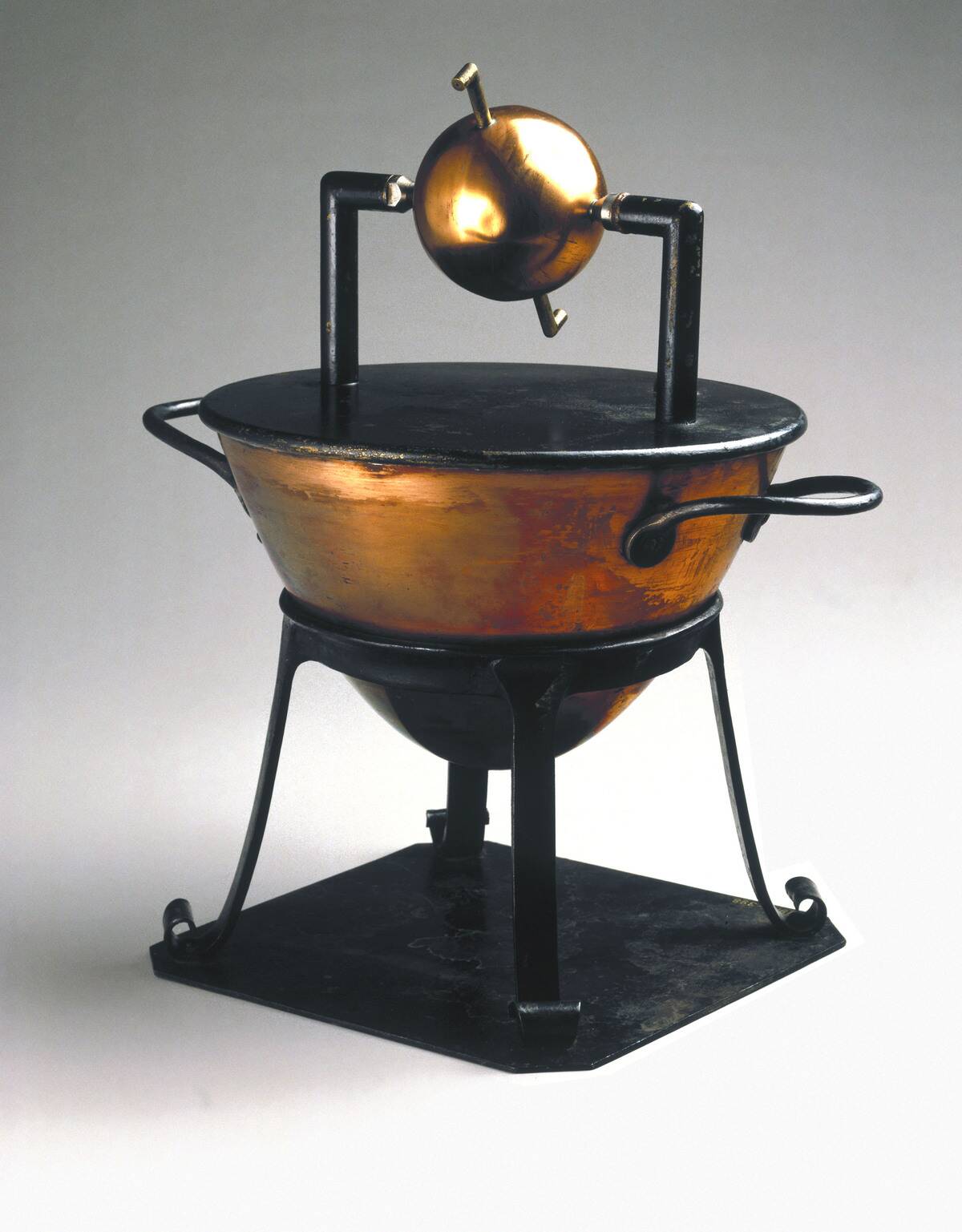
The Aeolipile, invented by Heron of Alexandria, is often considered the world’s first steam engine. This device used steam pressure to create rotary motion, a principle that would not be fully harnessed until the Industrial Revolution.
While it was mostly a novelty in its time, the Aeolipile is a fascinating precursor to modern engines, highlighting the innovative spirit of ancient inventors.
The Lycurgus Cup: A Masterpiece of Ancient Nanotechnology

The Lycurgus Cup is a Roman glass drinking cup from the 4th century with a peculiar property: it changes color depending on the light source. This effect is due to the presence of nanoparticles of gold and silver embedded in the glass.
Scientists today are still unraveling how ancient artisans achieved this, making the cup a stunning example of early nanotechnology.
The Roman Aqueducts: Engineering Marvels of Water Supply

The Roman aqueducts are a testament to the empire’s engineering prowess, supplying cities with fresh water through gravity alone. These marvels could stretch over 50 miles long and included intricate systems of tunnels, bridges, and pipes.
Their construction required precise planning and execution, and many aqueducts still stand today as a tribute to Roman ingenuity.
The Inca Road System: An Advanced Network of Connectivity

The Inca Road System, or Qhapaq Ñan, spanned over 25,000 miles across diverse terrains, connecting the vast Inca Empire. It featured suspension bridges and staircases, demonstrating sophisticated engineering skills.
This network facilitated communication, trade, and military mobilization, underscoring the Incas’ advanced understanding of infrastructure and their ability to unite a sprawling empire.
The Nasca Lines: Geoglyphs with Mysterious Purpose

The Nasca Lines, etched into the Peruvian desert, are a series of massive geoglyphs depicting animals, plants, and geometric shapes. Spanning hundreds of feet, their purpose remains a mystery, sparking theories ranging from astronomical calendars to ritualistic paths.
Whatever their function, these lines showcase impressive artistic and engineering skills of the Nasca culture.
The Colossus of Rhodes: The Engineering Feat of a Greek Giant

The Colossus of Rhodes stood as a monumental statue of the sun god Helios, towering over 100 feet high at the entrance of Rhodes’ harbor. Constructed in 280 BC, it was one of the Seven Wonders of the Ancient World.
Its construction utilized bronze and iron, and despite its eventual collapse, it remains a symbol of ancient Greek engineering ambition.
The Pyramids of Egypt: Architectural Wonders of Precision

The Pyramids of Egypt, especially the Great Pyramid of Giza, are marvels of ancient architecture. Built as tombs for pharaohs, these structures showcase incredible precision and alignment with celestial bodies.
The methods used in their construction remain a topic of debate, yet they stand as a testament to the ingenuity and ambition of ancient Egyptian civilization.
The Qin Shi Huang Terracotta Army: A Monumental Assembly of Art and Warfare

The Terracotta Army, buried with China’s first emperor, Qin Shi Huang, consists of thousands of life-sized figures, each with unique features. Discovered in 1974, these warriors were meant to protect the emperor in the afterlife.
Their intricate detail and massive scale reflect advanced craftsmanship and the emperor’s desire for power even beyond death.
The Indus Valley Civilization’s Urban Planning: Ahead of Its Time

The Indus Valley Civilization, flourishing around 2500 BCE, exhibited advanced urban planning with grid-like street layouts, sophisticated drainage systems, and standardized brick sizes.
Cities like Mohenjo-daro and Harappa reveal a high level of social organization and architectural skill, highlighting a civilization that was remarkably advanced for its time.
The Lighthouse of Alexandria: A Beacon of Ancient Ingenuity

The Lighthouse of Alexandria, also known as the Pharos of Alexandria, was one of the tallest man-made structures of the ancient world.
Built on the island of Pharos in the 3rd century BCE, it guided sailors safely into the bustling port city. Its ingenious design and use of mirrors to project light over long distances made it a beacon of ancient engineering and innovation.