The most fascinating experiments ever conducted

Trending Now
Science has always been a beacon of curiosity, leading us to explore the unknown and challenge our understanding of the world.
From the smallest particles to the complexities of human behavior, experiments have paved the way for groundbreaking discoveries.
The Double-Slit Experiment: Unlocking the Mysteries of Light and Matter

The double-slit experiment is a fascinating demonstration of the dual nature of light and matter. When light passes through two slits, it creates an interference pattern, suggesting wave-like behavior.
Yet, when observed, light behaves like particles. This paradox challenges our understanding of quantum mechanics, highlighting the mysterious nature of observation itself. It’s a mind-bending concept that continues to intrigue physicists and laypeople alike.
Pavlov’s Dogs: The Birth of Classical Conditioning

Ivan Pavlov’s experiments with dogs laid the foundation for classical conditioning. By pairing the sound of a bell with the presentation of food, Pavlov conditioned dogs to salivate at the sound alone.
This discovery revealed how associative learning works, influencing fields like psychology and education. Pavlov’s work remains a cornerstone in understanding how behaviors can be learned and modified.
The Stanford Prison Experiment: A Dive into Human Psychology

Conducted by Philip Zimbardo in 1971, the Stanford Prison Experiment examined the psychological effects of perceived power. Participants were assigned roles as guards or prisoners in a simulated prison environment.
The study quickly spiraled out of control, with guards exhibiting abusive behavior. It highlighted the impact of situational factors on behavior, raising ethical questions and offering insights into authority dynamics.
The Large Hadron Collider: Exploring the Frontiers of Particle Physics

The Large Hadron Collider (LHC) is the world’s largest and most powerful particle accelerator, located at CERN. It aims to explore fundamental questions about the universe, such as the existence of the Higgs boson.
In 2012, the LHC confirmed the particle’s existence, providing insights into the origin of mass. This monumental achievement has furthered our understanding of the universe’s building blocks and continues to push the boundaries of particle physics.
The Marshmallow Test: Delving into Delayed Gratification

The Marshmallow Test, conducted by Walter Mischel in the 1960s, studied delayed gratification in children. Participants were given a choice: eat one marshmallow immediately or wait and receive two.
The study found that children who delayed gratification tended to have better life outcomes. This experiment has sparked discussions on self-control, willpower, and their role in personal success, influencing both psychology and education.
The Harlow Monkey Experiments: The Importance of Maternal Comfort

Harry Harlow’s experiments with rhesus monkeys in the 1950s and 60s examined the importance of maternal contact. Monkeys were given a choice between a wire mother with food and a cloth mother without.
They overwhelmingly preferred the cloth mother, emphasizing the need for comfort and emotional security. Harlow’s work underscored the significance of affection in development, influencing child-rearing practices and attachment theory.
The Rosenhan Experiment: Questioning Psychiatric Diagnoses

David Rosenhan’s experiment in the 1970s challenged the validity of psychiatric diagnoses. Pseudopatients feigned hallucinations to gain admission to psychiatric hospitals, then acted normally.
Despite this, they were diagnosed with psychiatric disorders and struggled to be released. The study exposed flaws in diagnostic processes and prompted discussions on mental health care, leading to reforms in psychiatric evaluation and treatment.
The Tuskegee Syphilis Study: A Dark Chapter in Medical Ethics

The Tuskegee Syphilis Study, conducted from 1932 to 1972, involved observing untreated syphilis in African American men. Participants were misled about their treatment, leading to severe ethical violations.
The study’s exposure in 1972 sparked outrage and led to significant changes in research ethics, including informed consent requirements. This dark chapter serves as a reminder of the importance of ethical standards in medical research.
The Biosphere 2 Experiment: A Trial in Self-Sustaining Ecosystems

Biosphere 2, built in the early 1990s, was an ambitious project to create a self-sustaining ecosystem. Eight people lived inside the sealed environment, which included various biomes.
The experiment faced challenges, such as oxygen depletion and food shortages, but provided valuable insights into ecological systems and human impact. While not entirely successful, Biosphere 2 remains a testament to human ingenuity and the quest for sustainable living.
The Minnesota Starvation Experiment: Insights into Human Resilience
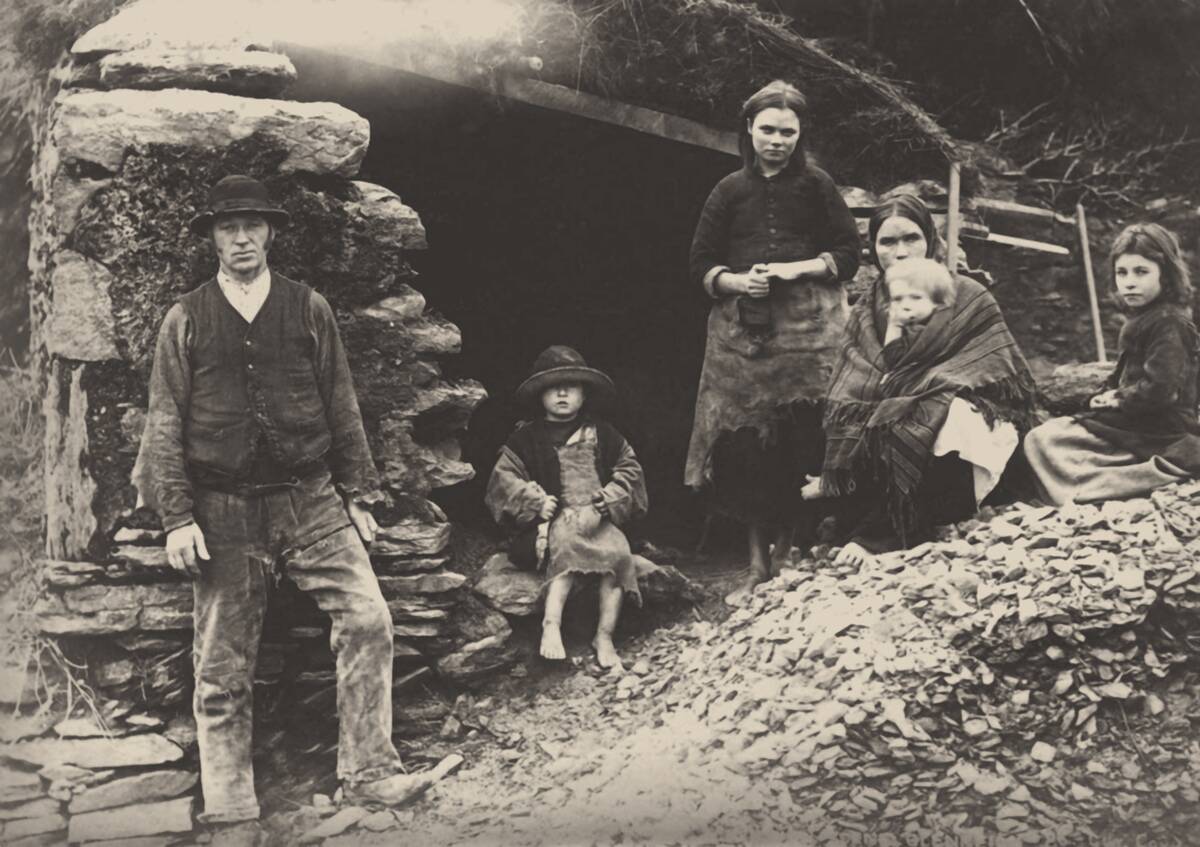
Conducted during World War II, the Minnesota Starvation Experiment studied the effects of starvation on the human body and mind. Participants underwent a semi-starvation diet to simulate famine conditions.
The study revealed the physical and psychological impacts of starvation, contributing to the development of rehabilitation programs for war victims. It highlighted human resilience and the importance of nutrition in recovery and health.
The Robbers Cave Experiment: Understanding Group Conflict and Cooperation

The Robbers Cave Experiment, led by Muzafer Sherif in the 1950s, explored intergroup conflict and cooperation. Boys at a summer camp were divided into groups, leading to rivalry and hostility.
When faced with common challenges, they cooperated, reducing tensions. The study demonstrated how group dynamics can influence behavior, offering insights into conflict resolution and the power of shared goals in fostering cooperation.