The biggest waterfalls in the world

Trending Now
Waterfalls have long captivated the human imagination, drawing visitors from around the globe to witness their breathtaking beauty and power. From the towering heights of Angel Falls to the iconic roar of Niagara, each waterfall offers a unique spectacle.
These natural wonders not only serve as stunning backdrops for adventure seekers and nature lovers but also play vital roles in their respective ecosystems, supporting diverse flora and fauna.
Angel Falls: The Sky-High Wonder of Venezuela

Angel Falls in Venezuela is the world’s highest uninterrupted waterfall, with a total height of approximately 3,212 feet and a main uninterrupted drop of about 2,648 feet from Auyán-tepui.
Named after American aviator Jimmie Angel, who made a documented flight over the falls in 1933, this natural wonder is located within Canaima National Park, a UNESCO World Heritage Site. Because of its extraordinary height and strong winds, water from the falls can break into mist before reaching the base, creating a spectacular and ethereal atmosphere.
Tugela Falls: The Towering Beauty of South Africa

Tugela Falls, located in the Drakensberg Mountains of South Africa, is traditionally considered the world’s second-highest waterfall, although its ranking and total height have been the subject of measurement disputes. It cascades down the face of the dramatic Amphitheatre in five major tiers, with a traditionally cited total height of approximately 3,110 feet.
The surrounding Royal Natal National Park offers hiking trails with spectacular views of the falls and Amphitheatre, particularly when rainfall increases the water flow. The dramatic landscape and towering cliffs make Tugela Falls one of South Africa’s most impressive natural landmarks.
Niagara Falls: The Iconic Powerhouse of North America
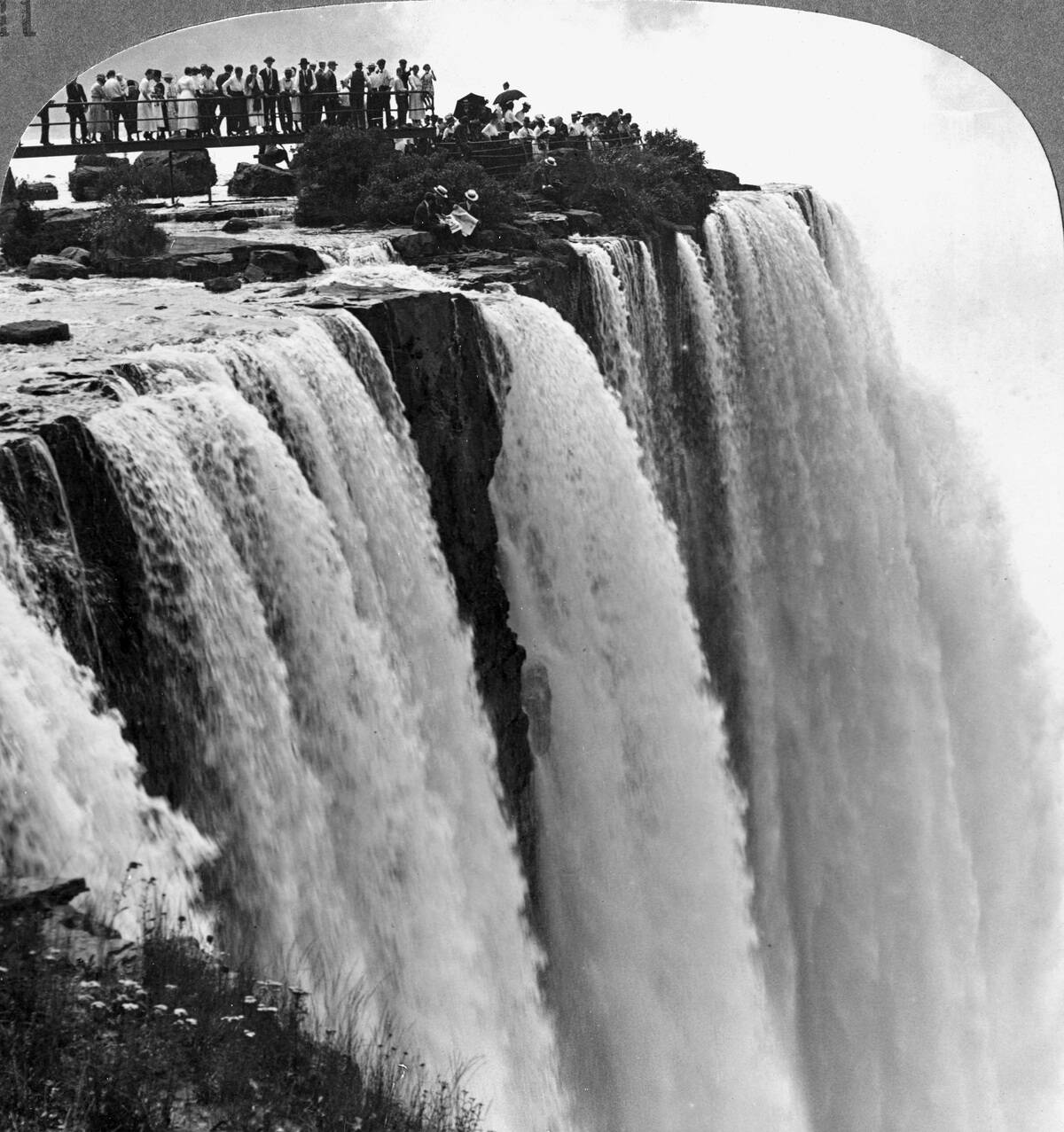
Niagara Falls, straddling the border between the United States and Canada, is one of the most famous waterfall systems in the world. Comprising three separate falls—Horseshoe Falls, American Falls, and Bridal Veil Falls—Niagara has an average flow of approximately 85,000 cubic feet per second, although the flow varies with seasonal conditions and water management.
This immense volume of water has made the Niagara River an important source of hydroelectric power, while the falls themselves attract millions of tourists each year.
Victoria Falls: The Thundering Smoke That Thunders

Victoria Falls, known locally as “Mosi-oa-Tunya” or “The Smoke That Thunders,” is located on the border of Zambia and Zimbabwe along the Zambezi River. It is often described as the world’s largest waterfall based on its combined width of approximately 5,604 feet and maximum height of about 354 feet, creating one of the world’s largest sheets of falling water.
The enormous volume of water produces a spectacular mist that can be seen from considerable distances, particularly during periods of high flow. The surrounding Zambezi region supports wildlife including elephants, hippos, and crocodiles, while nearby protected areas offer opportunities for safari adventures.
Iguazu Falls: The Jaw-Dropping Marvel of Argentina and Brazil

Iguazu Falls, located along the border between Argentina and Brazil, is a spectacular series of around 275 individual waterfalls extending for approximately 1.7 miles. The most famous section, Devil’s Throat, is a dramatic U-shaped chasm where enormous volumes of water plunge into the gorge, creating a thunderous display of natural power.
Surrounded by lush Atlantic Forest, the region supports an extraordinary array of wildlife, including toucans, howler monkeys, and the elusive jaguar. The exceptional biodiversity of the surrounding forest makes Iguazu an important natural area as well as one of South America’s most spectacular attractions.
Yosemite Falls: The Majestic Cascade of California

Yosemite Falls, located in California’s iconic Yosemite National Park, is the tallest waterfall in Yosemite and one of the tallest in the United States, with a total drop of 2,425 feet. The falls consist of three sections: Upper Yosemite Fall, the Middle Cascades, and Lower Yosemite Fall.
Spring is generally the best time to see the falls at their most powerful, when melting snow feeds the cascades and creates an awe-inspiring display. The surrounding park offers numerous hiking trails and breathtaking views of Yosemite Valley and the Sierra Nevada mountains.
Kaieteur Falls: The Hidden Gem of Guyana

Kaieteur Falls, located in the rainforest of Guyana’s Kaieteur National Park, is renowned as one of the world’s most powerful single-drop waterfalls, with a main uninterrupted drop of approximately 741 feet. Despite its remote location, it is famous for the substantial volume of water flowing over its dramatic sandstone escarpment.
The Potaro River feeds the falls, while the surrounding rainforest supports unique wildlife, including the golden rocket frog and the Guianan cock-of-the-rock. The area’s protected status and relative isolation help preserve its remarkable natural environment, making Kaieteur Falls a distinctive destination for adventurous travelers.
Detian Falls: The Transnational Beauty of China and Vietnam

Ban Gioc–Detian Falls, known as Ban Gioc in Vietnam and Detian in China, is a spectacular transnational waterfall located on the border between the two countries. The falls lie along the Quay Son River and consist of multiple cascades surrounded by dramatic limestone karst peaks, creating a picturesque landscape.
Rather than relying on disputed rankings, the waterfall is notable for its impressive width, setting, and location on an international border. The surrounding region is rich in cultural history and is home to ethnic communities whose traditions add to the area’s distinctive character.
Gocta Cataracts: The Enchanting Secret of Peru

Gocta Cataracts, located in the Amazonas Region of northern Peru, is widely regarded as one of the world’s tallest waterfalls, with a commonly cited total height of approximately 2,530 feet. Although the falls were long known to local communities, they gained international attention after their height was measured and publicized in the early 2000s.
Surrounded by lush cloud forests, Gocta supports a variety of wildlife, including numerous bird and mammal species. Local folklore tells of a mysterious mermaid or water spirit associated with the falls, adding a fascinating cultural dimension to this spectacular natural landmark.
Sutherland Falls: The Scenic Splendor of New Zealand

Sutherland Falls, located in Fiordland National Park on New Zealand’s South Island, is one of the country’s highest waterfalls, with a total drop of approximately 1,903 feet. The three-tiered falls are fed by Lake Quill, which lies in a landscape shaped by glacial activity.
The remote and rugged terrain of Fiordland offers spectacular mountain and wilderness scenery and attracts outdoor enthusiasts from around the world. The Milford Track, one of New Zealand’s most famous hiking trails, passes through the area, with a side track providing access to the base of this impressive natural landmark.
Plitvice Waterfalls: The Fairy-Tale Cascades of Croatia

The waterfalls of Plitvice Lakes National Park in Croatia form a spectacular network of cascades connecting the park’s 16 lakes, which were designated a UNESCO World Heritage Site in 1979. The lakes and waterfalls are continually shaped by natural travertine barriers formed through the deposition of calcium carbonate over thousands of years.
The vibrant turquoise and blue-green waters, surrounded by lush forests and vegetation, create a remarkable landscape that attracts visitors from around the world. An extensive network of wooden walkways, footbridges, and hiking trails allows visitors to explore this unique natural wonder up close.
Gullfoss: The Golden Falls of Iceland

Gullfoss, meaning “Golden Falls,” is one of Iceland’s most iconic waterfalls, located along the Hvítá River in southwestern Iceland. The falls consist of a distinctive two-stage cascade, dropping a total of approximately 105 feet into a rugged canyon.
Gullfoss is one of the three main attractions of Iceland’s famous Golden Circle, along with the Geysir geothermal area and Þingvellir National Park. The falls can be particularly striking in winter, when snow and ice surround the rushing water and create a dramatic landscape.
Rhine Falls: The Mighty Roar of Switzerland and Germany

Rhine Falls, located near Schaffhausen in northern Switzerland, is widely regarded as Europe’s largest waterfall by volume or average flow. Measuring approximately 492 feet wide and 75 feet high, the falls create a spectacular display of rushing water, particularly during periods of high flow.
Visitors can take boat trips to experience the roaring cascades at close range or explore the surrounding area, which has a rich history and cultural heritage. Nearby Schloss Laufen, perched above the falls, offers impressive viewpoints overlooking the waterfall and the Rhine River.