Things you didn’t know about the goblin shark

Trending Now
The goblin shark is one of the ocean’s most enigmatic creatures, often dubbed the “living fossil” due to its ancient lineage. With its peculiar appearance and elusive nature, this deep-sea dweller has captured the curiosity of marine biologists and ocean enthusiasts alike.
Despite being rarely seen, the goblin shark’s unique features and mysterious lifestyle make it an intriguing subject for study and fascination.
The Goblin Shark’s Unique Appearance
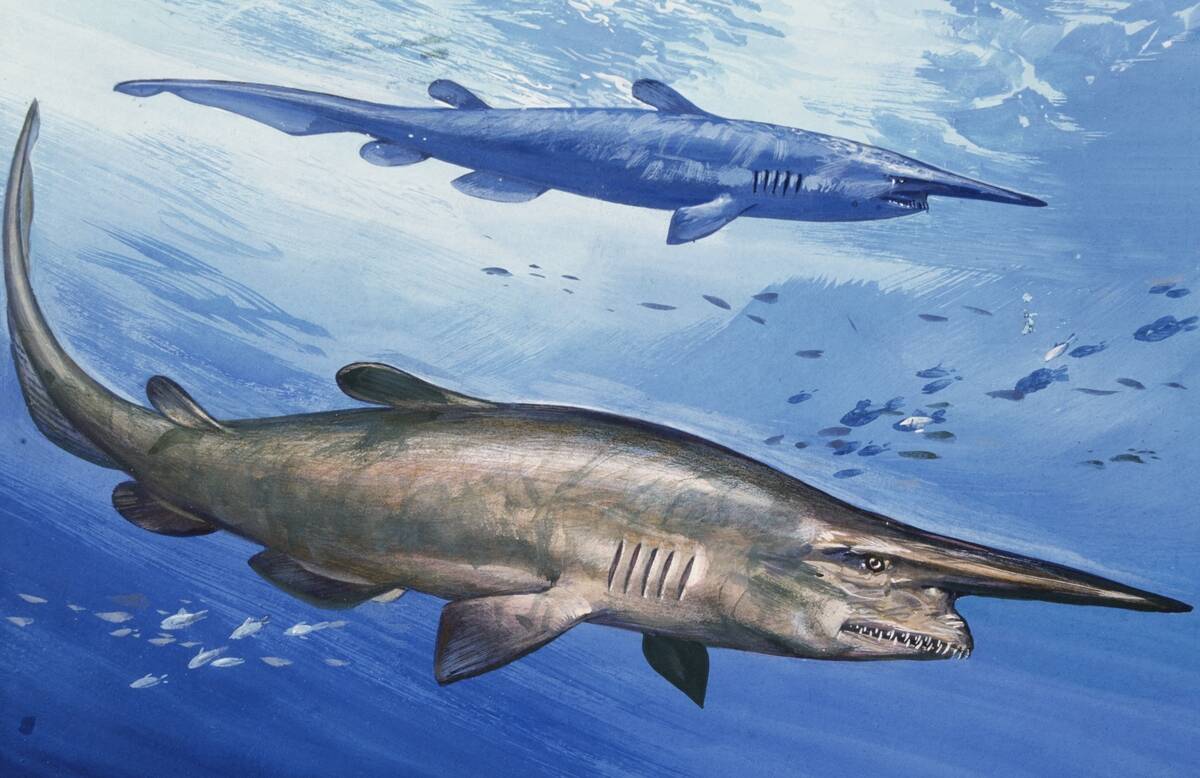
Sporting a long, flattened snout and a protrusible jaw, the goblin shark looks like something out of a sci-fi movie. Its pinkish skin, due to visible blood vessels, adds to its eerie charm.
Unlike most sharks, the goblin shark’s teeth are needle-like, designed for gripping slippery prey. This unusual appearance has earned it the nickname “the alien of the deep.”
Where in the World Do Goblin Sharks Live?

Goblin sharks have a wide distribution, found in deep waters across the Atlantic, Pacific, and Indian Oceans. They are most commonly sighted off the coasts of Japan, which is why they are sometimes called “tenguzame” in Japanese.
However, their elusive nature means they are rarely encountered by humans, making sightings a rare treat for researchers.
The Deep-Sea Habitat of Goblin Sharks

Goblin sharks inhabit the deep-sea environment, typically residing at depths of 100 to 1,300 meters. These depths provide a cold, dark habitat where the goblin shark’s unique adaptations help it thrive.
The pressure and low light conditions of the deep sea have shaped the goblin shark’s physiology, allowing it to navigate and hunt in this challenging environment.
How the Goblin Shark Got Its Name

The goblin shark’s name is derived from its resemblance to mythical goblins in Japanese folklore, known for their grotesque and unusual features.
The common name ‘goblin shark’ is a translation of its Japanese name, tenguzame. The word tengu refers to a supernatural being in Japanese folklore often depicted with a long nose, which resembles the shark’s elongated snout. This cultural connection highlights the shark’s striking and otherworldly look.
The Goblin Shark’s Family Tree

Belonging to the family Mitsukurinidae, the goblin shark is the only extant member of its family, a lineage that dates back around 125 million years.
This ancient family tree is what earns the goblin shark its “living fossil” status. Its closest relatives are long extinct, making it a unique window into the past of shark evolution.
A Closer Look at the Goblin Shark’s Jaw
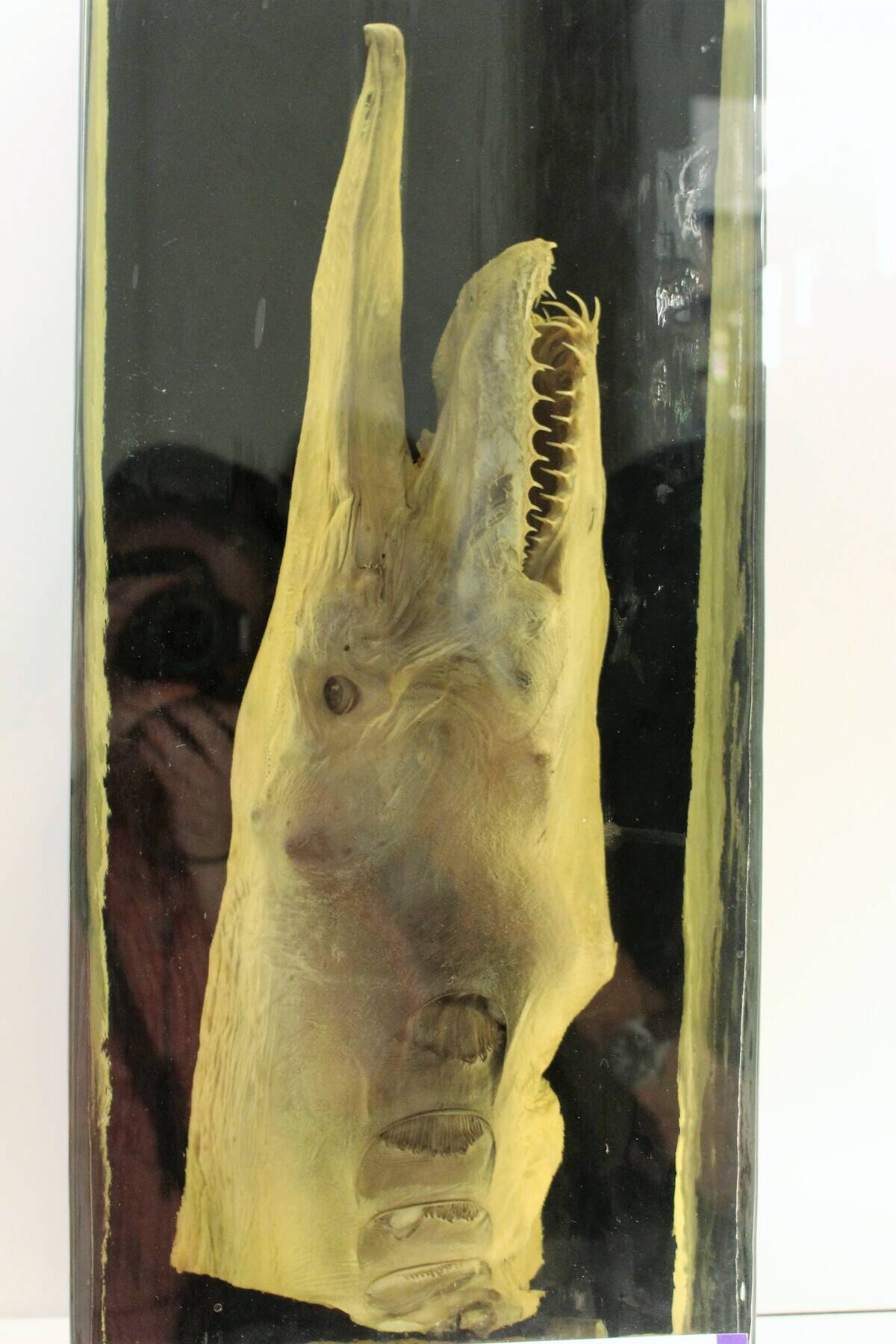
The goblin shark’s jaw is a marvel of evolutionary engineering. It can extend dramatically to snatch prey, a feature known as “slingshot feeding.”
This rapid jaw extension is powered by specialized ligaments and muscles, allowing the shark to capture unsuspecting prey with remarkable speed and precision. It’s a fascinating adaptation that sets the goblin shark apart from other shark species.
The Goblin Shark’s Diet: What’s on the Menu?

Goblin sharks primarily feed on deep-sea fish, squid, and crustaceans. Their diet reflects their deep-sea habitat, where these creatures are abundant.
The goblin shark’s needle-like teeth are perfect for gripping slippery prey, ensuring they don’t escape once caught. This specialized diet underscores the shark’s adaptation to its unique environment.
How Goblin Sharks Hunt Their Prey

Goblin sharks are ambush predators, relying on stealth and surprise to catch their prey. They use their long snouts, equipped with electroreceptors, to detect the electric fields of nearby fish.
Once close enough, the goblin shark’s jaw extends rapidly to capture its target, a hunting technique that is both efficient and effective in the deep-sea environment.
Goblin Shark Reproduction: A Mystery of the Deep

Little is known about the reproductive habits of goblin sharks, as they are rarely observed in the wild. Scientists believe they give birth to live young, like many other shark species, but specifics such as gestation period and litter size remain elusive.
This lack of information adds to the goblin shark’s mystique and highlights the challenges of studying deep-sea creatures.
How Scientists Study Goblin Sharks

Studying goblin sharks involves a mix of deep-sea exploration and technology. Researchers use submersibles and remote-operated vehicles (ROVs) to observe these creatures in their natural habitat.
Additionally, specimens caught accidentally by deep-sea trawlers provide valuable insights into their anatomy and biology. Despite these efforts, much about the goblin shark remains unknown.
Conservation Status: Are Goblin Sharks Endangered?

Currently, the goblin shark is listed as “Least Concern” by the International Union for Conservation of Nature (IUCN).
However, due to their deep-sea habitat, population estimates are difficult to determine. While not considered endangered, their rarity and the challenges of studying them mean that any changes in their population could go unnoticed.
Fun Facts About Goblin Sharks You Didn’t Know

Did you know that goblin sharks can grow up to 12 feet long? Despite their size, they are not considered a threat to humans due to their deep-sea lifestyle.
Another fun fact: their pinkish hue is not due to pigmentation but rather their translucent skin, revealing the blood vessels underneath. These quirky traits add to the goblin shark’s allure and mystery.