Inside the world of Roman gladiators

Trending Now
Step into the ancient world of Roman gladiators, where the clash of swords and the roar of the crowd created an electrifying atmosphere. These iconic figures were more than just fighters; they were a symbol of Roman culture and entertainment.
From their origins to their enduring legacy, gladiators captivate our imagination even today. Their stories, filled with bravery, skill, and sometimes tragedy, offer a glimpse into the complexities of Roman society.
Origins of Gladiatorial Combat: From Funeral Rites to Spectacle
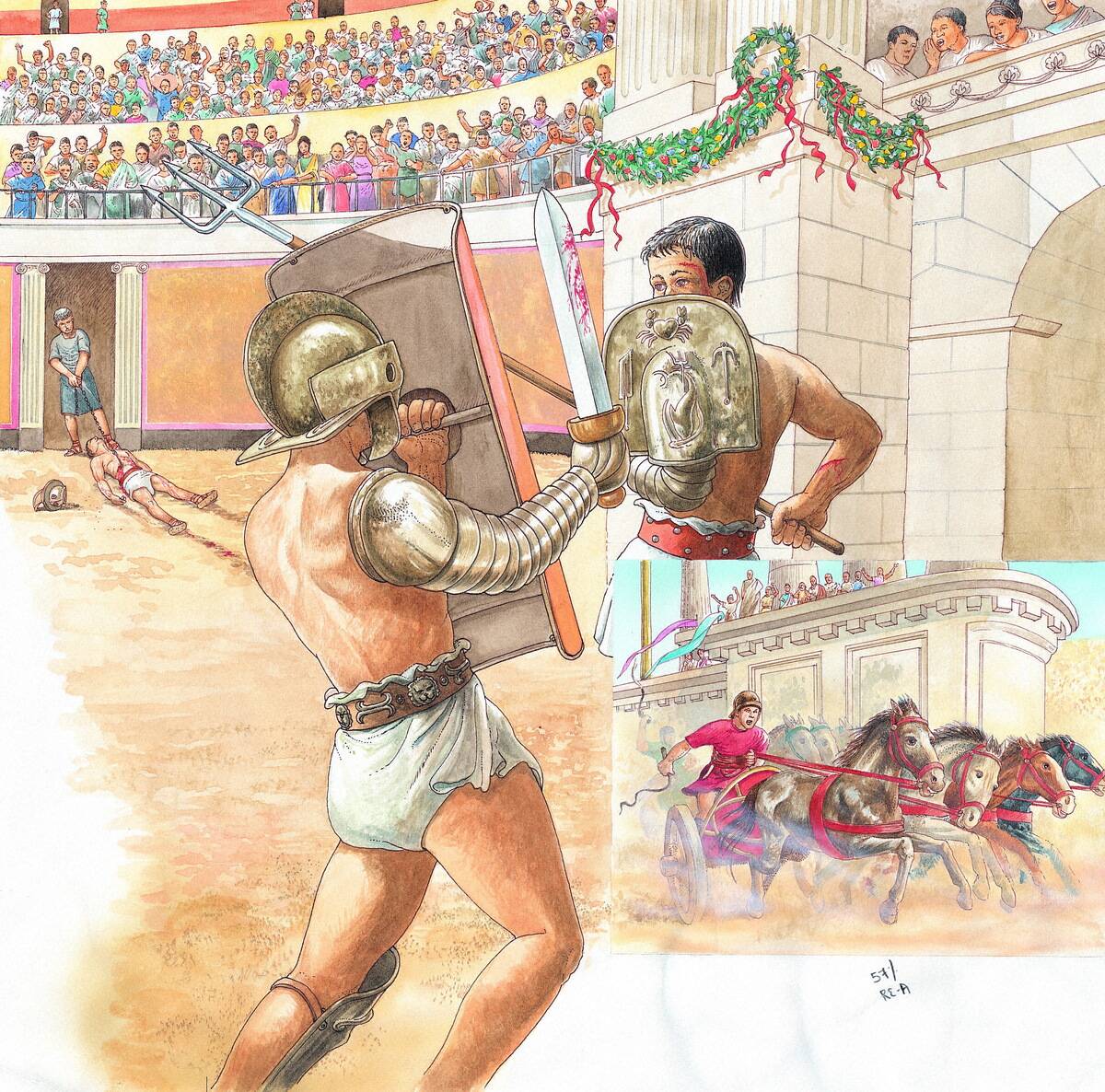
Gladiatorial combat began as part of funeral rites, intended to honor the deceased with displays of bravery and strength. The first recorded gladiatorial games took place in 264 BC, organized by the sons of Junius Brutus Pera.
Over time, these combats evolved into grand spectacles, with the Roman elite using them to display power and wealth. By the time of the Roman Empire, gladiatorial games had become a central feature of public entertainment.
The Gladiator Schools: Training Grounds for Warriors

Gladiators were trained in special schools called ‘ludi,’ where they honed their skills under the watchful eyes of experienced trainers. These schools were often harsh environments, with rigorous routines designed to mold recruits into formidable fighters.
The most famous of these was the Ludus Magnus in Rome, located near the Colosseum. Here, gladiators learned various fighting techniques, preparing for the day they would face their opponents in the arena.
Types of Gladiators: More Than Just Fighters

Not all gladiators were the same; they were categorized into different types based on their fighting style and weaponry. The ‘Murmillo’ was heavily armed, resembling a Roman legionary, while the ‘Retiarius’ fought with a net and trident, relying on agility.
The ‘Thraex’ wielded a curved sword and small shield, offering a unique combat style. Each type brought its own flair to the arena, adding variety and excitement to the games.
The Life of a Gladiator: Daily Routines and Challenges

Life as a gladiator was grueling, with a daily routine centered around intense physical training and discipline. Gladiators followed carefully managed diets to support their demanding training, their meals appear to have been rich in carbohydrates with barley, wheat, and legumes being important staples.
Despite the harsh conditions, some gladiators achieved fame and fortune, gaining adoration from the public. However, the constant threat of injury or death loomed over them, making their lives both thrilling and perilous.
The Arena: The Heart of Gladiatorial Combat

The arena was the epicenter of gladiatorial combat, with the Colosseum in Rome being the most iconic venue. Capable of seating up to 50,000 spectators, it was a marvel of engineering and a symbol of Roman grandeur.
The arena’s design allowed for elaborate spectacles, including staged naval battles. Its sand-covered floor, known as the ‘harena,’ absorbed blood, making it an apt stage for the dramatic battles that unfolded.
Weapons and Armor: Tools of the Trade

Gladiators wielded a variety of weapons, each suited to their fighting style. The ‘gladius,’ a short sword, was a common choice, while others used spears, daggers, or even nets.
Armor varied as well, with some gladiators donning helmets, arm guards, and greaves for protection. The choice of weapons and armor was not just practical but also theatrical, enhancing the spectacle and excitement of the combat.
The Role of the Editor: The Master of Ceremonies

The ‘editor’ was the organizer of the games, often a wealthy politician or emperor, who decided the fate of the gladiators. They had the power to spare or condemn a defeated fighter, a decision sometimes influenced by the crowd’s reaction.
The editor’s role was crucial, as they curated the event’s program and ensured it ran smoothly, balancing the demands of entertainment with political and social considerations.
Gladiators and Social Status: From Slaves to Superstars

While many gladiators were slaves or prisoners of war, some volunteered for the chance at fame and fortune. Successful gladiators could achieve celebrity status, with fans idolizing their skills and bravery.
They were akin to modern sports stars, with endorsements and public adoration. However, despite their popularity, gladiators remained socially marginalized, often denied the full rights of Roman citizens.
The Spectators: The Roman Public’s Love Affair with Gladiators

The Roman public was enthralled by gladiatorial games, flocking to arenas to witness the spectacle. These events were a social occasion, where people from all walks of life gathered to cheer for their favorite fighters.
The games provided a sense of community and an escape from daily life. The crowd’s enthusiasm was palpable, with their reactions influencing the outcome of the battles and the fate of the gladiators.
Women in the Arena: Female Gladiators and Their Stories

Though less common, female gladiators, known as ‘gladiatrices,’ did exist and participated in the games. They appear to have fought primarily against other women rather than directly against male gladiators, and their appearances were treated as unusual or exotic spectacles.
Their presence added a unique dimension to the games, drawing both fascination and controversy. While records of their exploits are sparse, their existence highlights the diverse and complex nature of gladiatorial combat.
The Politics of Bloodsport: Gladiators and Power

Gladiatorial games were not just entertainment but a tool for political maneuvering. Emperors and politicians used them to gain favor with the public, showcasing their generosity and power.
The games served as a distraction from political issues, placating the masses with spectacle. This intricate relationship between politics and bloodsport underscores the strategic use of entertainment in ancient Rome to maintain social order.
The End of an Era: Decline and Fall of Gladiatorial Games

The decline of gladiatorial games began in the late Roman Empire, influenced by changing social attitudes and the rise of Christianity, which opposed such bloodsports. The last known gladiatorial games were held in the early 5th century AD.
As the empire crumbled, so did the infrastructure and resources needed to sustain these events. The end of the games marked a significant cultural shift, as Roman society moved away from its violent past.